Thursday, October 27, 2011

Dog Breed Insurance Help

(petbuzz, London, October 2011) - Dedicated information for dog owners seeking individual dog breed insurance information now has a new home thanks to pet insurance lifetime cover experts VetsMediCover.

In partnership with leading pet marketing provider, petbuzz, VetsMediCover has set up a dedicated website to cover dog breed specific insurance information.

The information contained on the website is designed to make it easier for caring dog owners to research and get fast access to dog breed insurance specifically related to their own type of dog.

Speaking about the initiative, Ryan O'Meara says:

"This service has been needed for a long time. Dog owners now are much more aware of the positive aspects of pet insurance. They have a greater understanding of the various elements of policy cover, claims issues, restrictions and the different types of pet insurance cover that different policies contain. 

http://www.dogbreedinsurance.co.uk/wp-content/uploads/2011/10/Pet-Insurance-for-Miniature-Schnauzer.jpg

By launching this site with VetsMediCover, we hope we'll be able to help dog owners by providing the most comprehensive, dog breed specific pet insurance resource."

According to a recent study carried out by K9 Magazine, 90% of dog owners questioned were completely satisfied with the quality of service provided by their vet, whilst the same proportion of owners, 90%, felt their vet was overcharging them for the services provided. 31% said they would be prepared to change their vet on account of the high fees being charged rather than the quality of service their dogs received.

As vet fees look set to continue to rise as pet health treatment becomes more sophisticated, dog insurance has never been so crucial for owners looking to minimise their exposure to unexpected costs.

Find out more: www.DogBreedInsurance.co.uk

Distributed by Taylor Guerney on behalf of petbuzz.

Dog Breed Insurance Help

(petbuzz, London, October 2011) - Dedicated information for dog owners seeking individual dog breed insurance information now has a new home thanks to pet insurance lifetime cover experts VetsMediCover.

In partnership with leading pet marketing provider, petbuzz, VetsMediCover has set up a dedicated website to cover dog breed specific insurance information.

The information contained on the website is designed to make it easier for caring dog owners to research and get fast access to dog breed insurance specifically related to their own type of dog.

Speaking about the initiative, Ryan O'Meara says:

"This service has been needed for a long time. Dog owners now are much more aware of the positive aspects of pet insurance. They have a greater understanding of the various elements of policy cover, claims issues, restrictions and the different types of pet insurance cover that different policies contain. 

http://www.dogbreedinsurance.co.uk/wp-content/uploads/2011/10/Pet-Insurance-for-Miniature-Schnauzer.jpg

By launching this site with VetsMediCover, we hope we'll be able to help dog owners by providing the most comprehensive, dog breed specific pet insurance resource."

According to a recent study carried out by K9 Magazine, 90% of dog owners questioned were completely satisfied with the quality of service provided by their vet, whilst the same proportion of owners, 90%, felt their vet was overcharging them for the services provided. 31% said they would be prepared to change their vet on account of the high fees being charged rather than the quality of service their dogs received.

As vet fees look set to continue to rise as pet health treatment becomes more sophisticated, dog insurance has never been so crucial for owners looking to minimise their exposure to unexpected costs.

Find out more: www.DogBreedInsurance.co.uk

Distributed by Taylor Guerney on behalf of petbuzz.

Clicker Training to Stop Puppy Chewing

Use the clicker method for training your dog. Clicker training is a form of conditioning that can help a dog to identify behaviour that produces praise or a reward. After your dog has successfully obeyed a command, use the clicker to indicate that he will get a treat. Your dog will soon learn if he isn't following commands or behaving correctly! Certain studies have shown that using a clicker reduces training time by one third.

When you are training your dog out of chewing inappropriately, remember to set him up for success. Furthermore, a dog that chews inappropriately needs to be kept away from danger. Hairbrushes, nylons, and other common household items pose a danger to dogs and can lead to choking and obstructions.

Clicker Training to Stop Puppy Chewing

Use the clicker method for training your dog. Clicker training is a form of conditioning that can help a dog to identify behaviour that produces praise or a reward. After your dog has successfully obeyed a command, use the clicker to indicate that he will get a treat. Your dog will soon learn if he isn't following commands or behaving correctly! Certain studies have shown that using a clicker reduces training time by one third.

When you are training your dog out of chewing inappropriately, remember to set him up for success. Furthermore, a dog that chews inappropriately needs to be kept away from danger. Hairbrushes, nylons, and other common household items pose a danger to dogs and can lead to choking and obstructions.

Wednesday, October 12, 2011

What Different Types of Dogs Are There?

Types of Dogs: Dog Breeds & Types

Dogs can be defined by the job they do, for example companion dogs are those that were bred to keep us company, and guard dogs were developed to protect their owners and their property. The American Kennel Club has taken these definitions further, and grouped dogs with similar purposes and temperaments together. This means that each group can consist of dogs that vary widely in appearance, and possibly even size. Let's have a closer look at the groups and the dogs that are in each one.

•    Sporting Group – these dogs were bred to hunt and retrieve. Because they were expected to work closely with their master, they make excellent companions. They love the water, and enjoy the opportunity to swim. These dogs aren't suited to a sedentary owner because they often need a lot of exercise and mental stimulation to be truly happy. Breeds in this group include the Spaniels, the Pointers and the Retrievers.

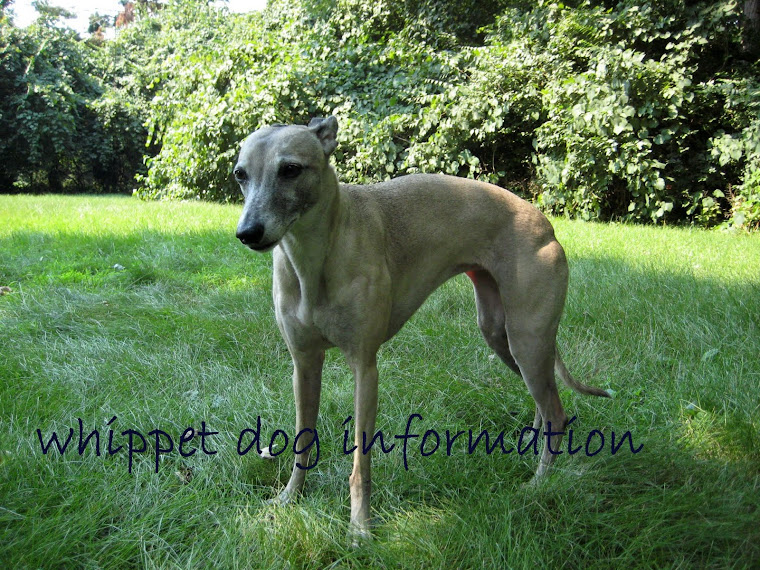
•    Hound Group – hound breeds were also used in the hunt, to track their prey by scent, and to run them down. They are a diverse group, and include sight hounds such as the Whippet and Afghan Hound, and scent hounds like the Bloodhound and Beagle. They are amiable and easy going dogs and fit in well with family life, however they can be difficult to call back if they start to chase any potential prey.
•   
•    Working Group – as the name suggests, these breeds had a job to do including guarding and pulling carts and sleds. They are intelligent and reliable, and are good family dogs. However, most breeds in this group are very large, and this should be taken into account by potential owners.
•   
•    These dogs need training from a young age because, while they are easy to manage when they are puppies, this rapidly changes when they are a 70-100lb adult. Breeds that fall into the working group include the Rottweiler, Newfoundland, Alaskan Malamute and Bullmastiff.
•   
•    Terriers – the most characteristic feature of members of the terrier group is their feisty and tenacious personality. They were bred to chase and kill vermin, and the tendency to be grumpy and argumentative with other animals often persists.
•   
•    Size varies, from the tiny West Highland White Terrier to the larger American Staffordshire Terrier and Airedale Terrier. They need an owner who can manage their stubborn and determined nature.
•   
•    Toy Dogs – these dogs serve but one purpose, and that is to be a companion. They are usually small enough to fit on your lap, and don't cost much to care for. Having said that, they have big personalities inside that small body, and are very resilient.
•   
•     Whether you want a dog to groom and dress up with ribbons, or one with a short low maintenance coat, you'll find a toy breed to suit. They are particularly suited to apartment life. This group includes such compact and attractive breeds as the Chihuahua, the Yorkshire Terrier and the Papillon.
•   
•    Herding Group – these breeds used to be included with the working dogs, but they were given their own group in 1983. All of these breeds are able to move and control other animals. They are extremely intelligent, and most need a lot of mental stimulation and physical exercise. They are not a breed for everyone. Dogs that fall into this category include the Border Collie, German Shepherd and Corgi.
•   
•    Non Sporting Group – this group contains a wide variety of breeds, with no real common traits. They vary in size, shape and coat type. It's almost as if any breed that didn't fit neatly into one of the other groups was put in the non sporting group. Breeds included in this group are as diverse as the Bulldog, the Lhasa Apso and the Dalmatian.
•   
•    Miscellaneous Group – the miscellaneous group contains those breeds that are not yet fully registered with the AKC, but are part of the Foundation Stock Service. Many of these breeds are registered in other parts of the world, just not in the United States. Others, like the Chinook were developed in America, but are not yet fully registered as a breed.
•   
•    They will stay in this group until they are fully recognized by the AKC, when they will be placed in one of the other groups, depending on their purpose. This means that breeds in the miscellaneous groups will be unfamiliar and there may be few examples of them in America. Some breeds that are currently in this group are the Pumi, the Rat Terrier, the Sloughi and the Peruvian Inca Orchid.

While we are talking about breeds, it's appropriate to make mention of the crossbreed dog, also known as a mongrel or cur. These dogs have uncertain parentage, and come in a range of sizes, colors and coat types. They may strongly resemble one particular breed, which can give you a hint as to their ancestry.

Some people believe that mixed breeds are healthier than purebreds, because of hybrid vigor. It's certainly possible, but a crossbreed pup may receive a double dose of unhealthy genes from their parents, and may have the worst features of his parent breeds. Add to this the fact that the parents of mixed breed pups are less likely to have undergone any genetic health tests before being mated, and you can see why there is no guarantee that they will be healthy. Having said that, they can be just as intelligent, and just as good a companion as a purebred animal.

Ryan O'Meara is editor and publisher of K9 Magazine.
Saturday, October 8, 2011

K9 Magazine Editor Ryan O'Meara on Dog Attacks

Ryan O'Meara, editor and publisher of K9 Magazine, a lifestyle magazine for dog lovers, has issued a warning to dog owners about the importance of understanding canine body language to spot the warning signs of a potential dog attack.

O'Meara, who is a former professional dog trainer, has previously spoken at the National Dog Warden Association on the topic of canine aggression.

He says:

"Understanding certain aspects of dog body language, what motivates them, what scares them and gaining more knowledge about things such as territory aggression, resource guarding and nervous aggression is the key for dog owners to recognise situations where their dog may be more likely to respond to certain situations with a bite."

O'Meara explains in his much talked about article "The Anatomy of a Dog Attack" how misreading the warning signs and failing to recognise tell-tale dog body language signals is one of the key reasons why people get attacked 'out of the blue'.

He explains:

"Dogs rarely bite people. However, if you examine some of the most serious dog attacks there is very often a correlating pattern."

O'Meara's remarks ring true in the cases of fatal dog attacks in Britain.

His article "What Causes Fatal Dog Attacks" details consistent patterns in all cases:

read more from Ryan O'Meara on dog attack patters.

K9 Magazine Editor Ryan O'Meara on Dog Attacks

Ryan O'Meara, editor and publisher of K9 Magazine, a lifestyle magazine for dog lovers, has issued a warning to dog owners about the importance of understanding canine body language to spot the warning signs of a potential dog attack.

O'Meara, who is a former professional dog trainer, has previously spoken at the National Dog Warden Association on the topic of canine aggression.

He says:

"Understanding certain aspects of dog body language, what motivates them, what scares them and gaining more knowledge about things such as territory aggression, resource guarding and nervous aggression is the key for dog owners to recognise situations where their dog may be more likely to respond to certain situations with a bite."

O'Meara explains in his much talked about article "The Anatomy of a Dog Attack" how misreading the warning signs and failing to recognise tell-tale dog body language signals is one of the key reasons why people get attacked 'out of the blue'.

He explains:

"Dogs rarely bite people. However, if you examine some of the most serious dog attacks there is very often a correlating pattern."

O'Meara's remarks ring true in the cases of fatal dog attacks in Britain.

His article "What Causes Fatal Dog Attacks" details consistent patterns in all cases:

read more from Ryan O'Meara on dog attack patters.

Monday, October 3, 2011

How to Give Pills to Your Dog

Urgh. This is one of those tasks that, depending on your dog, can be a real nightmare.

K9 Magazine's quick tip sheet: How to give tablets to dogs is a must read!

You can learn how to deal with those dogs who just refuse to eat tablets as well as get an insight in to the best methods to administer pills to dogs who wriggle and squirm.

Read it here: http://www.k9magazine.com/how-to-give-tablets-to-a-dog/

How to Give Pills to Your Dog

Urgh. This is one of those tasks that, depending on your dog, can be a real nightmare.

K9 Magazine's quick tip sheet: How to give tablets to dogs is a must read!

You can learn how to deal with those dogs who just refuse to eat tablets as well as get an insight in to the best methods to administer pills to dogs who wriggle and squirm.

Read it here: http://www.k9magazine.com/how-to-give-tablets-to-a-dog/